
Are Bioplastics Actually Better for the Environment?
By Catherine Haub
Greenwashing is a common marketing tactic to convince consumers that the products they are purchasing are good for the environment, and a very common strategy is leaving out important information about the products’ sustainability. Take bioplastics for example: the name makes it sound eco-friendly, and they’re definitely marketed that way, but there are usually some details left out. Bioplastics are often associated or marketed with the terms “compostable” or “biodegradable”, but leave out many important details as to how they are. It is important to note that they don’t mean the same thing.
- An item that is compostable means that a products has the ability to turn into compost under the right conditions, such as having the right amount of heat and oxygen [1].
- An item that is biodegradable means that an item can be broken down to its base through biological processes in a certain amount of time depending on the item as some take longer to degrade than others [1].
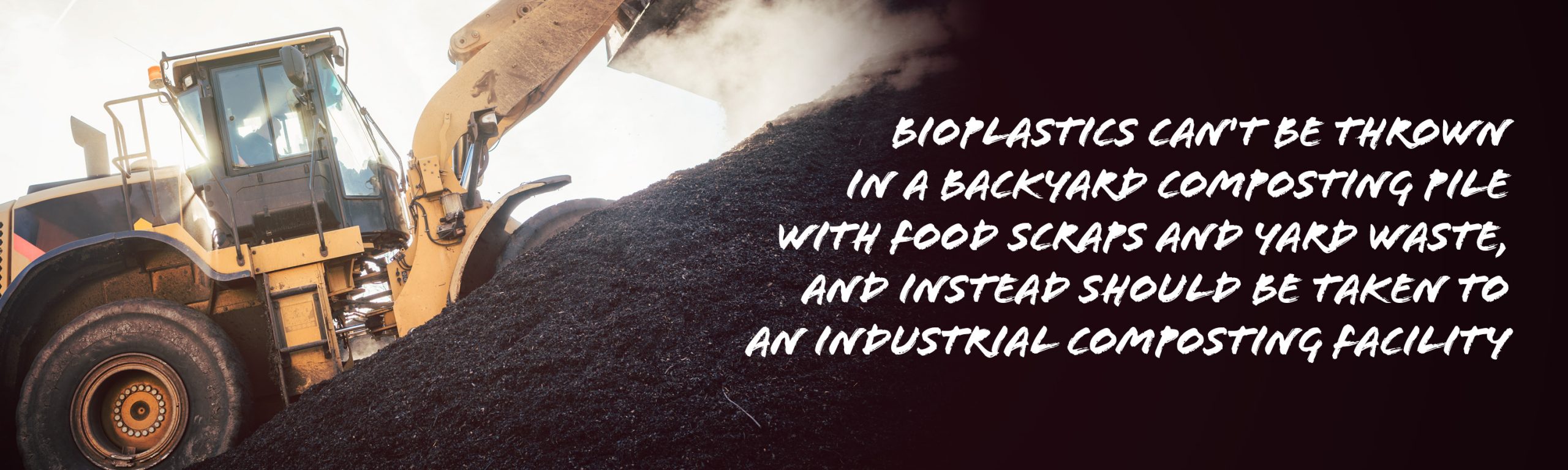
Many times when a bioplastic item is labeled as “compostable” the company isn’t lying, but they are leaving out important details as to how it is compostable. Bioplastics can’t be thrown in a backyard composting pile with food scraps and yard waste, and instead should be taken to an industrial composting facility [2]. While that still may not seem like an issue, there aren’t many of these facilities yet, so the likelihood that these items are actually decomposing properly is slim to none [3]. Recycling these items may seem like the next best answer, but bioplastics can’t be recycled like normal PET plastic. It is important to note that just because an item is compostable doesn’t mean that it is recyclable and vice versa [3]. What ends up happening most of the time with these bioplastics is they end up in landfills, taking a long time to decompose due to not having the right conditions [4], and a lot of times end up emitting greenhouse gases in the process [1].
Another issue with bioplastics are the resources used to make them. Regular plastics are made with petroleum, a non-renewable resource, while bioplastics are made with plants such as corn or sugarcane, resources that can be grown over and over again. On paper, this great as it will lead to moving away from our dependence on fossil fuels for plastics towards something that doesn’t emit greenhouse gases and that will never run out. The issue, though, lies with the resources needed to grow the crops to make the plastics. Land and water are obviously needed to grow these crops, moving them away from something we all need to survive: food. There are also concerns that growing the bioplastics industry could cause water shortages, desertification and loss of habitat leading to a drop in biodiversity [2].
There could be the potential of bioplastics resolving these composting issues later in the future, but for now we should be cautious when deciding on a product that markets itself as “biodegradable” or “compostable” and question if it truly is or not
Resources:
[1] What’s the Difference Between Biodegradable and Compostable? (greenmatters.com)
[2] Are bioplastics better for the environment than conventional plastics? | (ensia.com)
[4] Compostable vs. recyclable vs. biodegradable – Foodee