
Extended Producer Responsibility (EPR) is a policy approach that tasks producers with more responsibility for end-of-life management of their products, particularly paper and packaging.
The intent of this approach, and the laws that stem from it, is to reduce waste by encouraging recycling and reuse of discarded materials, decrease public spending on waste management, and encourage producers to be innovative in their product designs to limit their environmental impact.
In addition, producers are now required to help fund recycling infrastructure and education in states with EPR laws through a fee collection system that charges producers based on the type and amount of paper or packaging sold in each state.
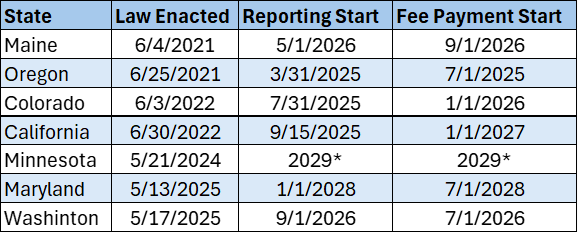
Currently, seven states have EPR laws relating to packaging: Maine, Oregon, Colorado, California, Minnesota, Maryland, and Washington.
Each state is partnering with a Producer Responsibility Organization (PRO) to help manage the implementation of their EPR program, and facilitate communications, reporting and fee collection from producers. The current approved PRO for Maine, Oregon, Colorado, California, Minnesota and Maryland is the Circular Action Alliance.
Updates and Deadlines
Maryland became the sixth state to pass EPR legislation in May. The Maryland law seeks to encourage producers to use recyclable, reusable, or compostable packaging.
Washington followed suit as the seventh state to pass an EPR law, focusing on consumer packaging products rather than industrial or commercial products. The law has provisions that will expand recycling collection services to hundreds of thousands of homes and potentially reduce consumer recycling bills. Producers must join the state-approved PRO by July 2026, and the first compliance deadlines begin in 2028.
In Colorado, producers who are not registered and participating in the Producer Responsibility Program are prohibited from selling products designated as “covered materials” as of July, 2025.
Many other states, including Illinois, Nebraska, and Massachusetts have recently introduced bills that would implement EPR programs. Though this process is slow moving, the trend of states pursuing EPR policies is likely to expand, with new states enacting changes every year.
What This Means for YOU
For paper and packaging product producers, it’s important to stay abreast of the regulatory landscape, and meet all deadlines to maintain compliance. Getting ahead of these new EPR laws by engaging with state approved PROs early is critical to understanding producer obligations, reporting timelines, and can be helpful to budget for any potential fees that might be incurred.
For the consumer, EPR legislation may increase the cost of packaging, as producers will likely adjust pricing to make up for the fees they’ll be required to pay in each state. However, most EPR programs may also mean more accessible and affordable recycling systems, better public education and awareness, and additional benefits from the reduced environmental impact offered by more easily recyclable products.
Sources
The National Law Review: 2025 EPR Packaging Update—New Laws, Deadlines & State Trends
Landbell H2 Compliance: US Packaging EPR Laws 2025: State-by-State Guide & Business Compliance
Reverse Logistics Group-Producer Responsibility Organizations: What are Producer Responsibility Organisations (PROs)? – Reverse Logistics Group
Washinton Department of Ecology̶ Recycling Reform Act: Recycling Reform Act – Washington State Department of Ecology